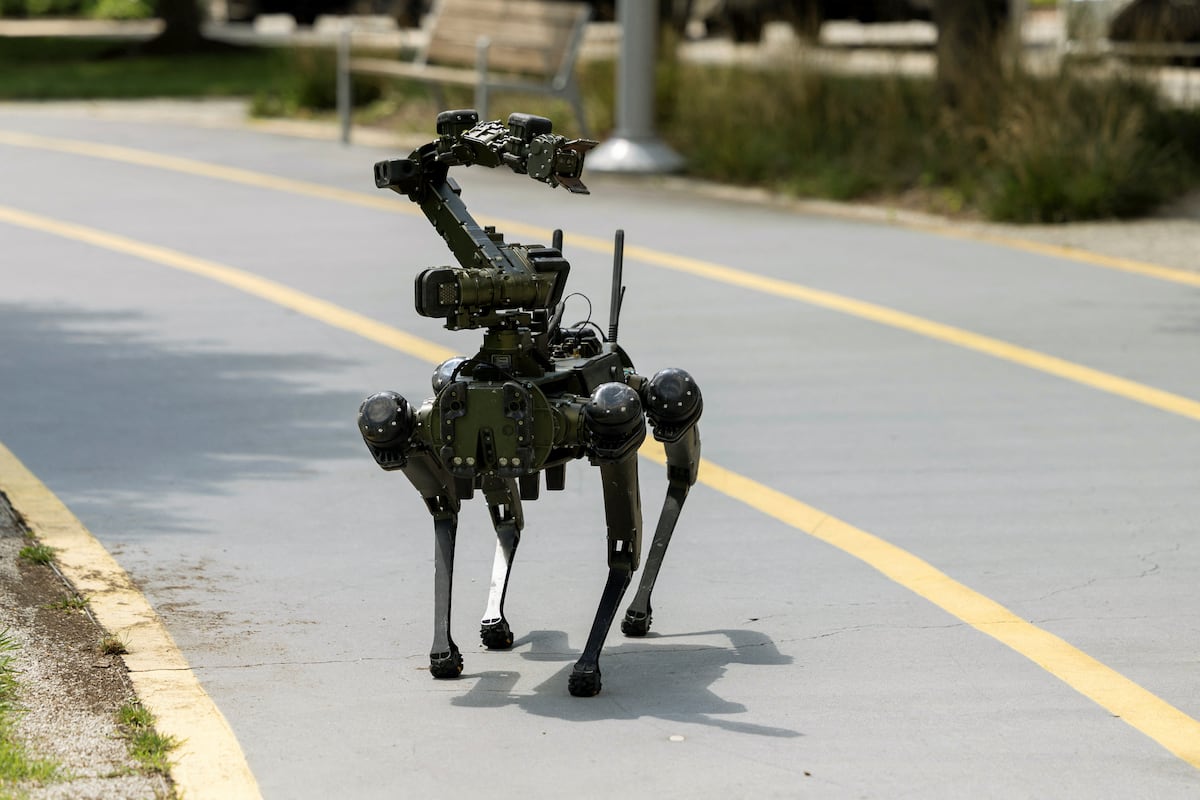
Researchers and a former U.S. defense official say Unitree Robotics based its best-selling robot dogs on breakthroughs from a U.S. Army-funded program. The Army Research Laboratory’s decade-long project, led by UPenn and MIT, developed lightweight quadruped designs that Unitree later commercialized in its $1,600 Go2 model. The company’s rapid rise—selling 18,000 quadrupeds last year—has drawn Pentagon scrutiny, leading to a 2024 listing of Unitree as a contributor to China’s defense industry.
Unitree disputes any wrongdoing, noting the military research was published openly. Yet its robots have appeared in PLA exercises, including a modified B1 series firing a rifle. U.S. companies like Ghost Robotics, which commercialized similar tech, struggle to compete on cost, producing just 1,000 units at prices over $165,000—far above Unitree’s sub-$100,000 models. The Pentagon even waived U.S.-made product rules to buy Unitree robots in 2023 due to lack of domestic alternatives.
Experts argue the gap reflects China’s coordinated industrial strategy, not just innovation. While U.S. research excels, scaling production lags behind China’s subsidized supply chains and reverse-engineering capabilities. The FCC has since banned imports of Unitree’s robots, but analysts warn trade barriers alone won’t close the gap without broader support for U.S. manufacturers.