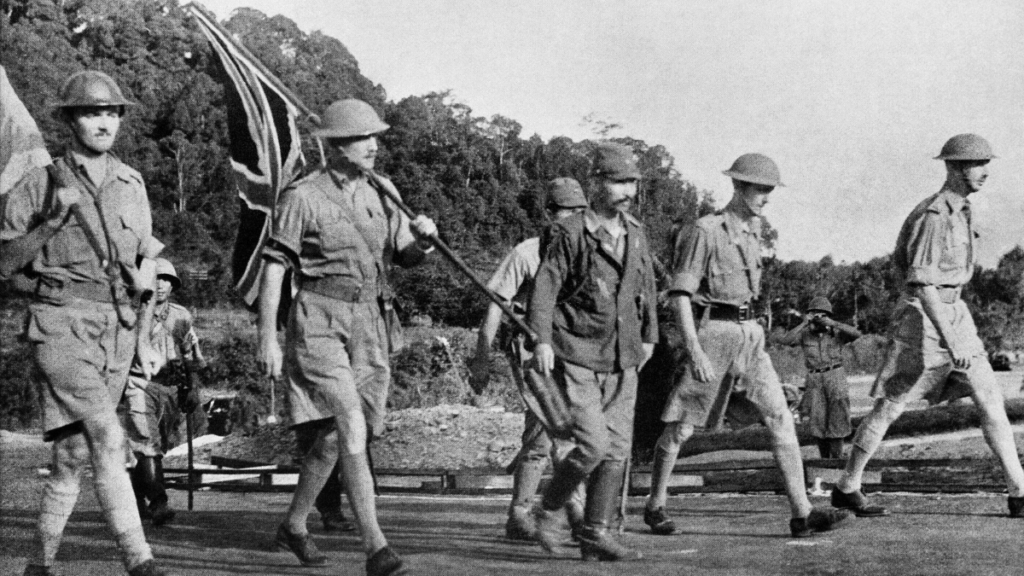
The fall of Singapore on February 15, 1942, was a calamitous event in World War II, with 100,000 men surrendering to inferior Japanese numbers. This defeat was a result of multiple factors, including the failure of British, Commonwealth, and American forces to engage in proper pre-conflict joint planning and the overreliance on naval reinforcements.
The collapse of Singapore highlights the importance of rigorous allied coordination, enhancing the survivability and logistical support of forces in theater, and thinking in terms of protracted campaigns rather than individual battles.

US defense planners can learn from this historical event by prioritizing joint planning, forward deploying forces to the Indo-Pacific, and preparing for unexpected shifts in the geopolitical environment.
The fall of Singapore serves as a reminder of the need for adaptability and flexibility in military strategy, and its lessons remain relevant today as the US navigates the complexities of the Indo-Pacific region.