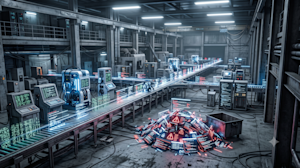
Large language models have turned software development into a production‑line mindset: engineers can now generate code at an industrial pace, and companies are eager to treat code as a commodity. The hype, however, masks a growing problem. Data from Faros AI shows task throughput per developer up 33.7% and PR merge rates up 16.2%, yet incidents per PR have jumped 242.7% and bugs per developer risen 54%. Google’s DORA research links higher AI adoption to poorer delivery stability, and real‑world projects report codebases fragmenting into multiple styles within months, making maintenance a nightmare.
The article argues that a true "software factory" must be built on a platform, not a loose collection of prompts, agents, and plugins. Core principles include unified data sharing, rerunability and traceability of every generation step, built‑in safety guardrails, and enterprise‑wide standardization. Quality control should be baked into the workflow from the spec stage, using static analysis and templated prompts to catch defects early rather than at the final review.
Without these foundations, speed alone merely amplifies technical debt. Organizations that embed traceable pipelines, enforce standards, and prioritize early testing will turn AI‑driven productivity into durable, reliable software rather than a flood of buggy code.