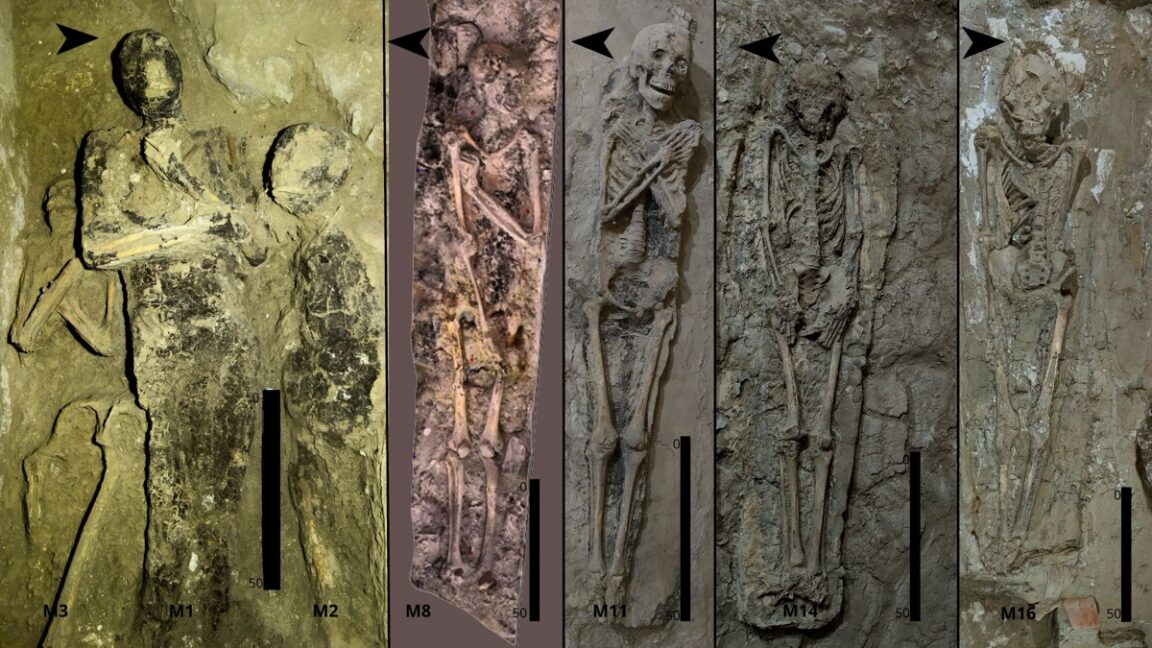
Archaeologists have traced a major shift in ancient Egyptian burial customs through a Theban tomb used for more than 2,000 years. A study in Frontiers in Environmental Archaeology examines tomb 209 in the western necropolis, originally built for a high official named Nisemro during the early 25th Dynasty (754–656 BCE) and later abandoned in the Ptolemaic period (305–30 BCE).
The research reveals how practices changed from individual burials in elaborate coffins to reusing earlier tombs for later interments, creating denser burial sites and occasional overlapping remains. The team focused on Side Chamber 3, a largely undisturbed secondary area, using an integrated approach that combined osteological analysis with data on body positioning, coffin use, and stratigraphic relationships to reconstruct the chronological sequence of burials.
The tomb’s location in an active drainage channel of the Wadi Hatasun led to repeated flash flooding, complicating the archaeological work but providing a unique record of layered interments over centuries.