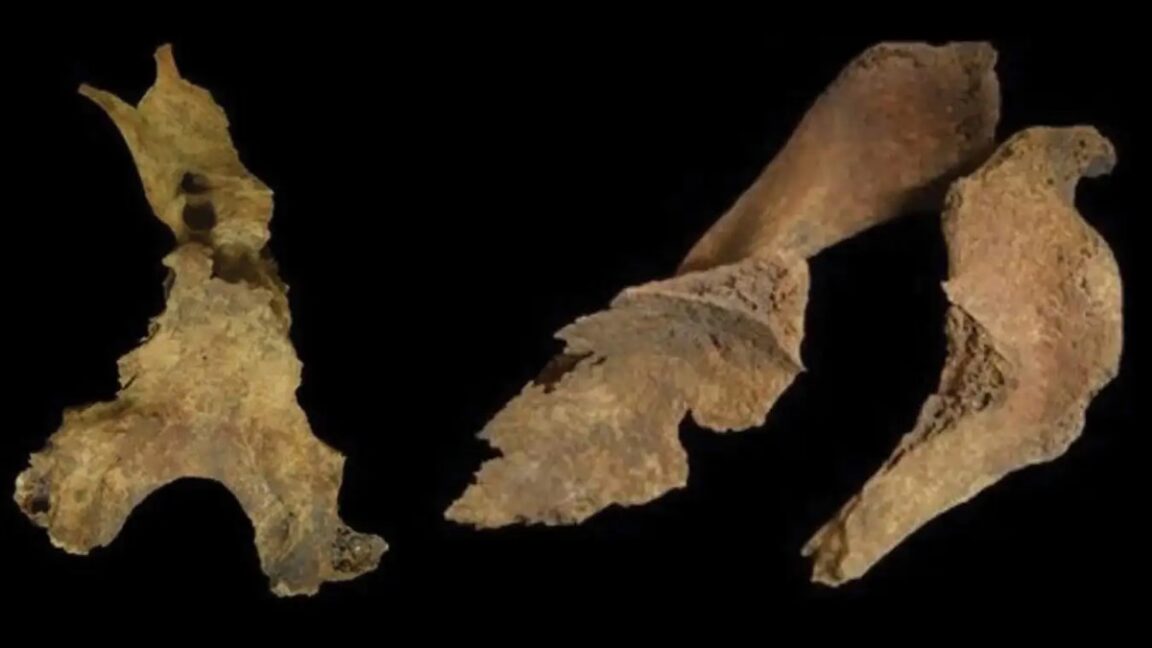
Archaeologists have identified what they interpret as scrape marks inside a juvenile skull from a burial cairn at Loch Borralie in northwest Scotland, indicating the brain may have been removed after death. The study, published in Antiquity, also reports that long bones from the same site were sharpened, possibly to serve as cutting tools.
The remains, uncovered after coastal erosion in 2000, belong to two individuals—a adult female and a juvenile whose cranium shows the marks. Radiocarbon dating of molar teeth places both deaths between 50 BCE and 70 CE. The female’s skull bears an unusual fracture at its base, which the authors argue resulted from a targeted impact rather than typical accidental trauma, and both scapulae exhibit perimortem breaks.
If confirmed, the findings add to sparse evidence of post‑mortem manipulation in Iron Age Britain, joining earlier reports of mummification and bone‑artifact production. The researchers suggest the brain removal could reflect ritual practice or practical reuse of tissue, and they call for further excavation and analysis to clarify the cultural significance of such treatment.