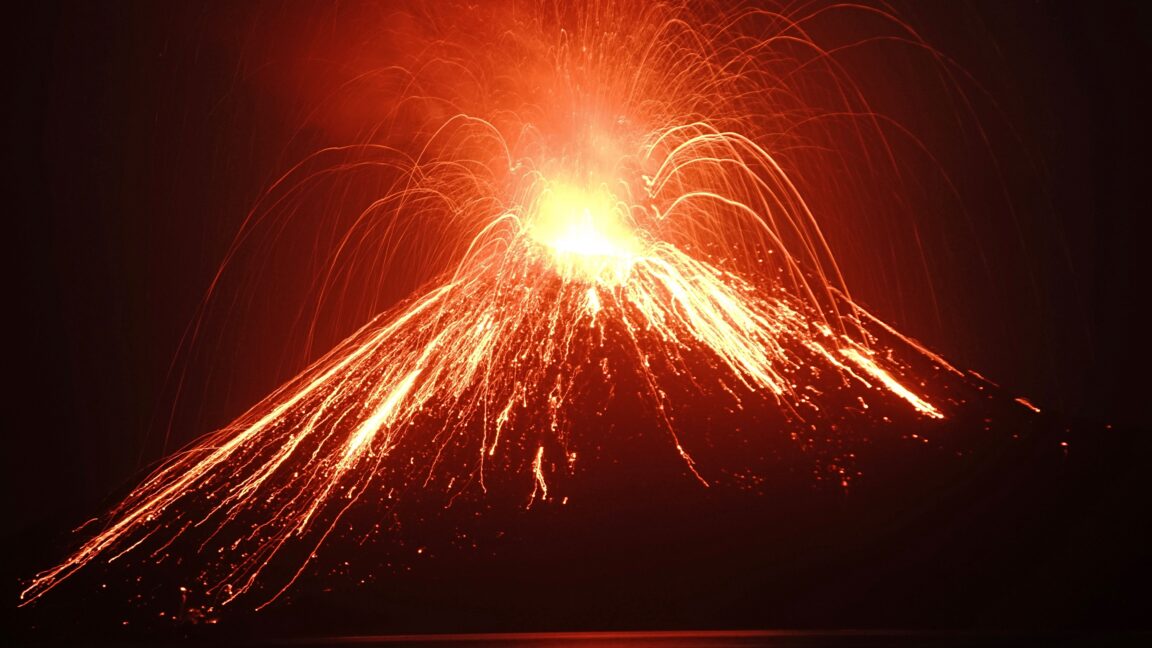
The 1883 eruption of Krakatau in the Sunda Strait obliterated two islands and most of a third on August 27, killing more than 36,000 people in tsunamis and pyroclastic flows. Telegraph wires carried breaking news of the disaster in real time, marking the first global, near-instant documentation of a volcanic catastrophe.
Victorian-era communications let scientists and the public track immediate effects like destroyed villages, vanished lighthouses, and falling volcanic stones across Java and Sumatra. The eruption’s atmospheric impact was equally far-reaching, with sulfur aerosols spreading globally and lowering temperatures for years, disrupting agriculture and weather patterns.
Findings from Krakatau became foundational to modern volcanology, offering early evidence of how massive eruptions influence climate and human societies. The disaster’s rapid documentation also set a precedent for real-time disaster reporting.