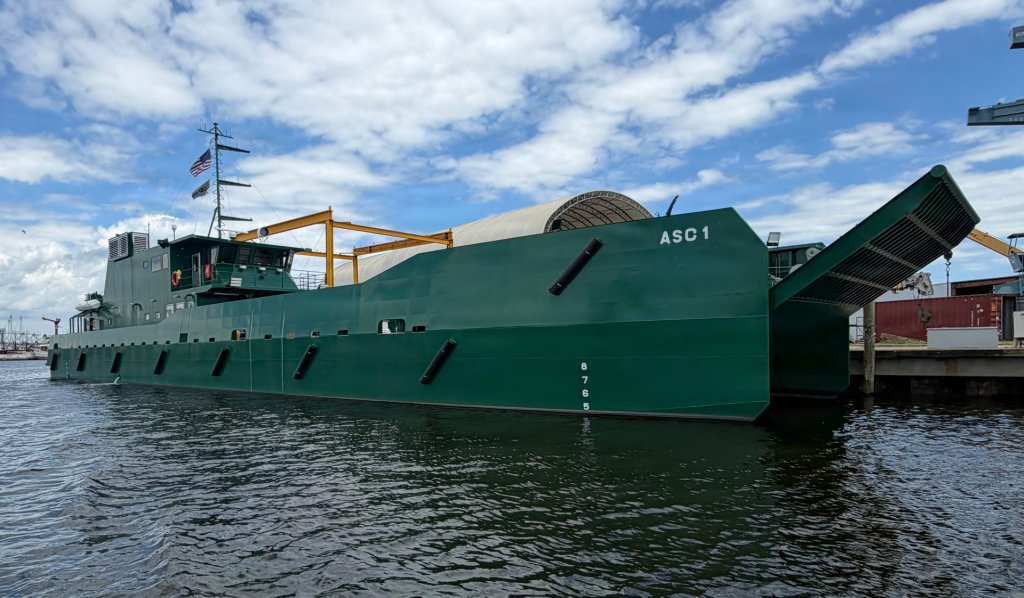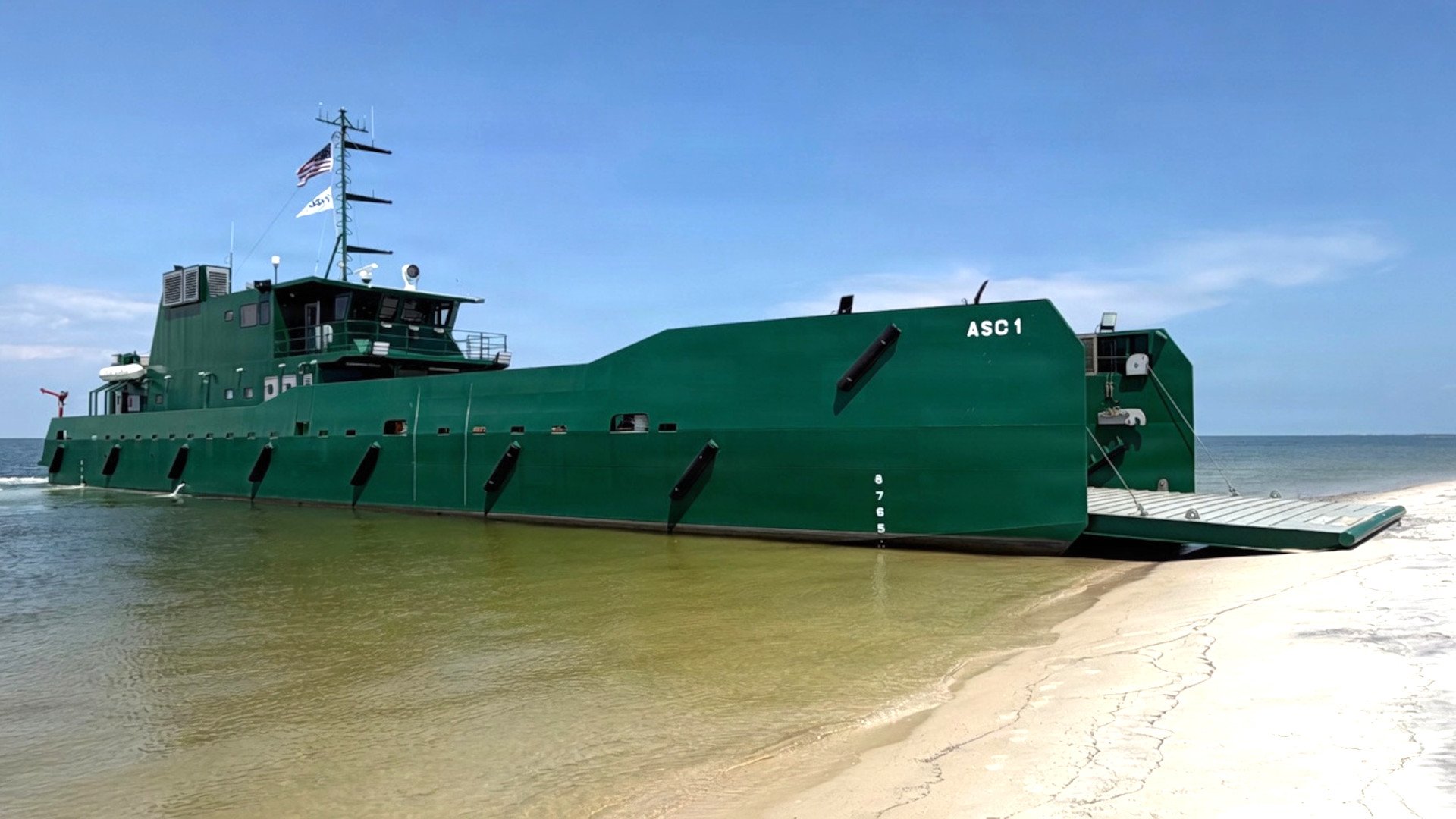
The U.S. Marine Corps has confirmed the technical acceptance of its first Ancillary Surface Craft (ASC), a new medium landing vessel developed in partnership with Australian firm Birdon. The craft, designated ASC-1, underwent validation during a recent acceptance process that highlighted its ruggedness and operational utility in demanding conditions.
The ASC is designed to support the Marine Corps’ Expeditionary Advance Base Operations (EABO) concept, enabling shore-to-shore maneuvering and sustainment in contested littoral environments. It can transport up to 46 tons of cargo and 40 combat-loaded Marines while operating in Sea State 5 and surviving conditions up to Sea State 7. The vessel features an advanced forward-looking sonar system for navigating uncharted, shallow waters and a bow ramp for beach landings.
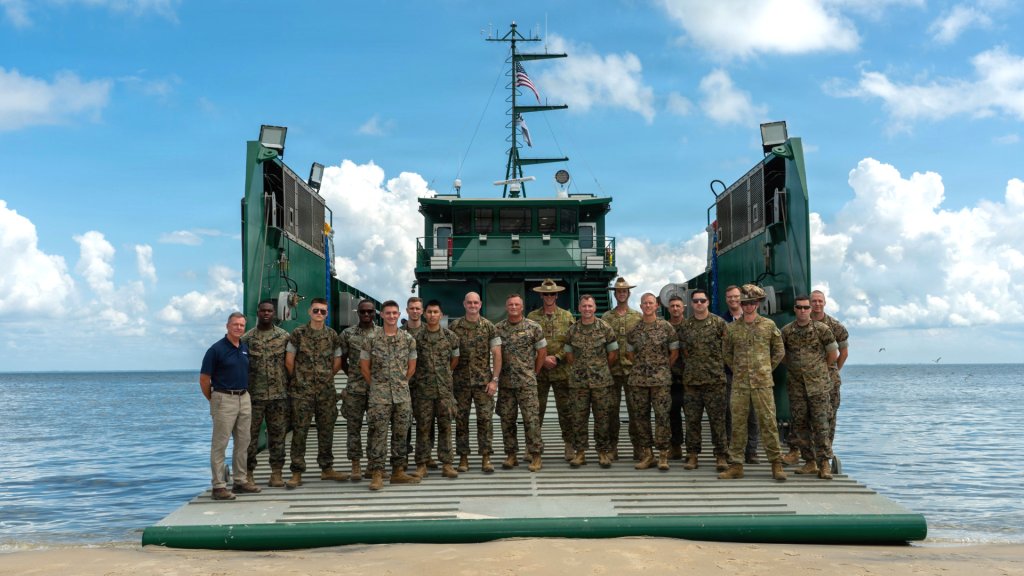
The Marine Corps has not confirmed formal delivery or the arrival timeline for the second ASC, but the first vessel is now considered fully operational. The ASC complements the future Medium Landing Ship (LSM) program, which remains delayed until at least 2029. Marine officials emphasize the craft’s role in reducing reliance on large amphibious ships for distributed operations in archipelagic regions.