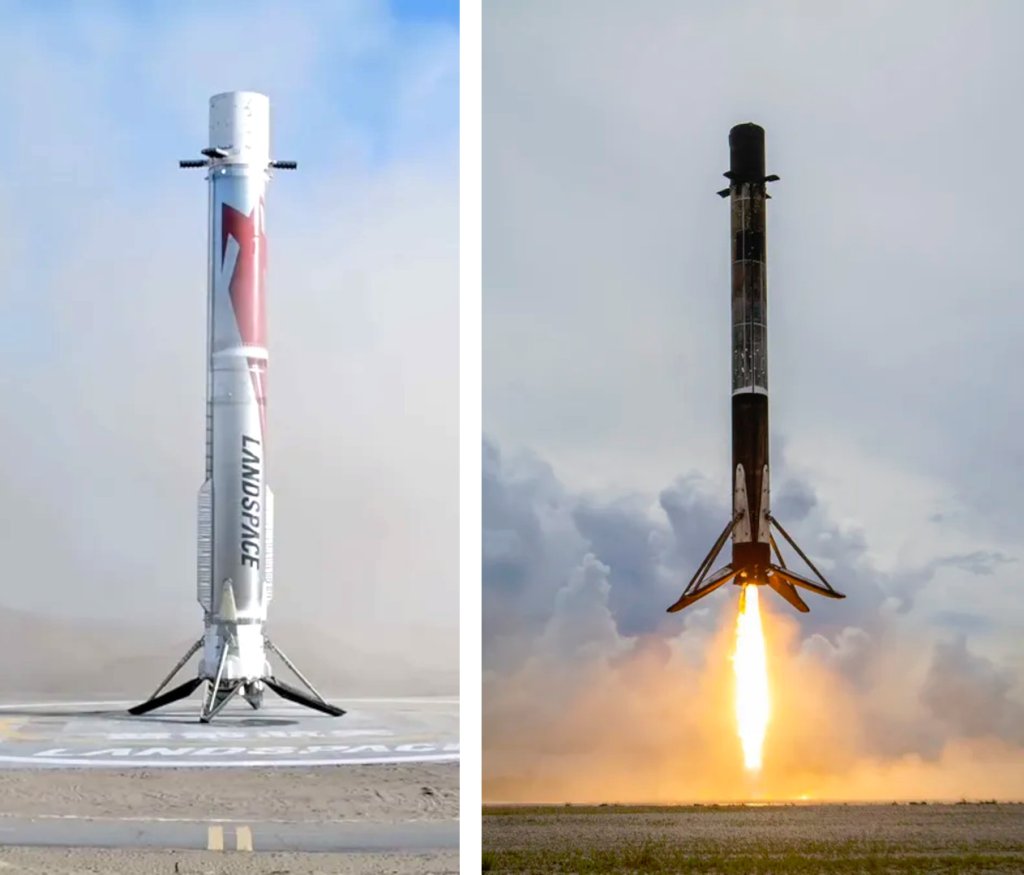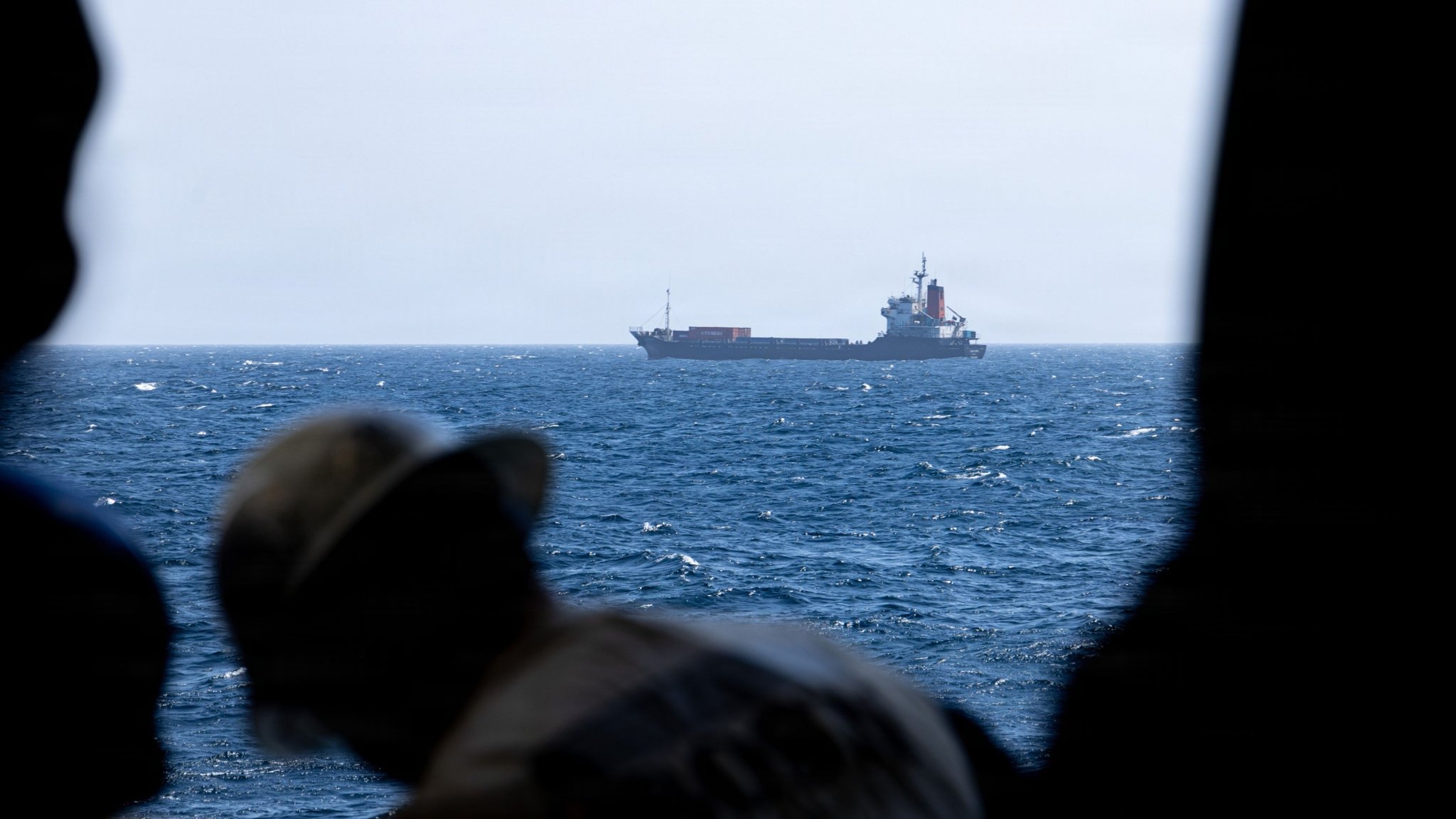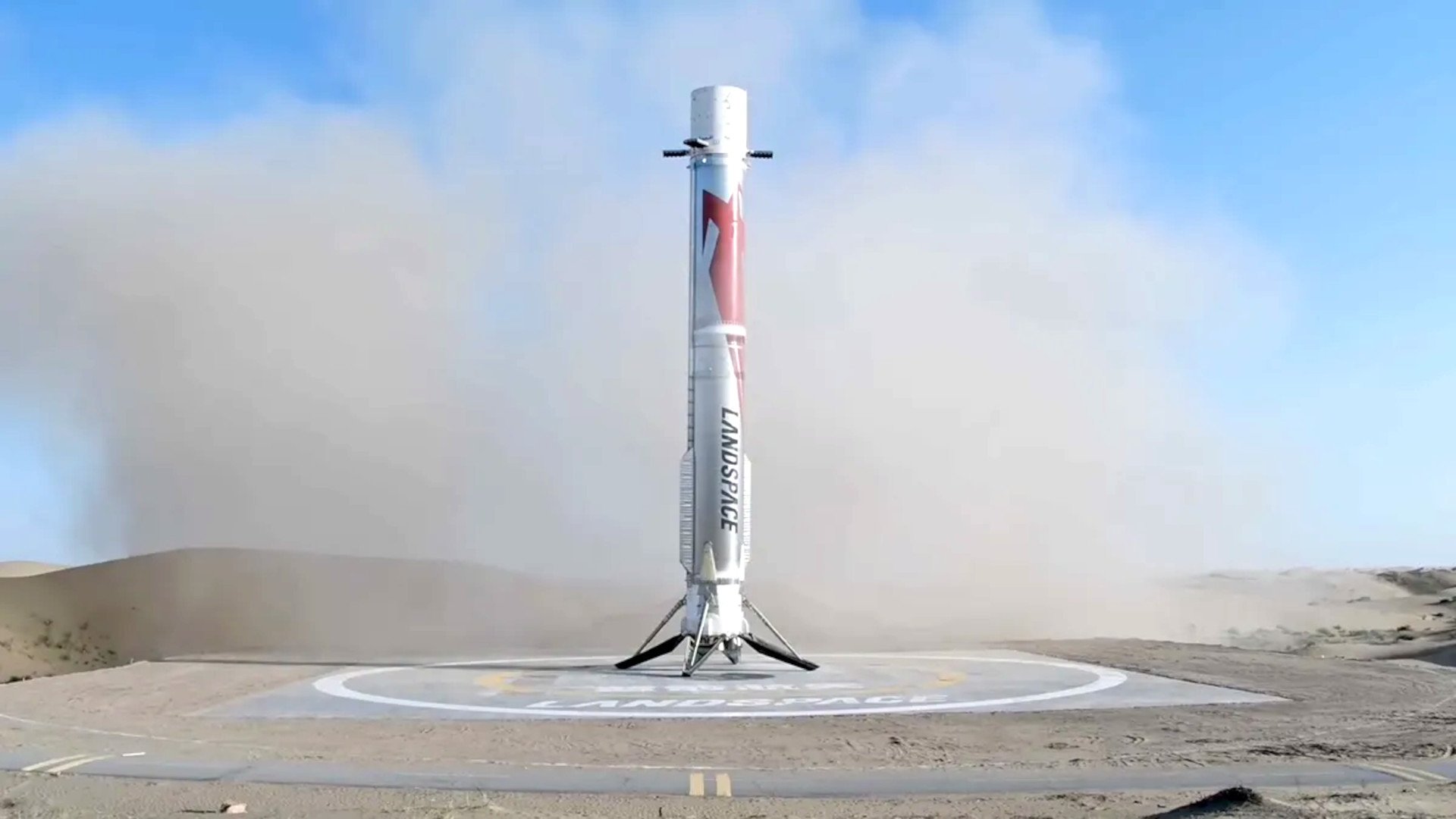
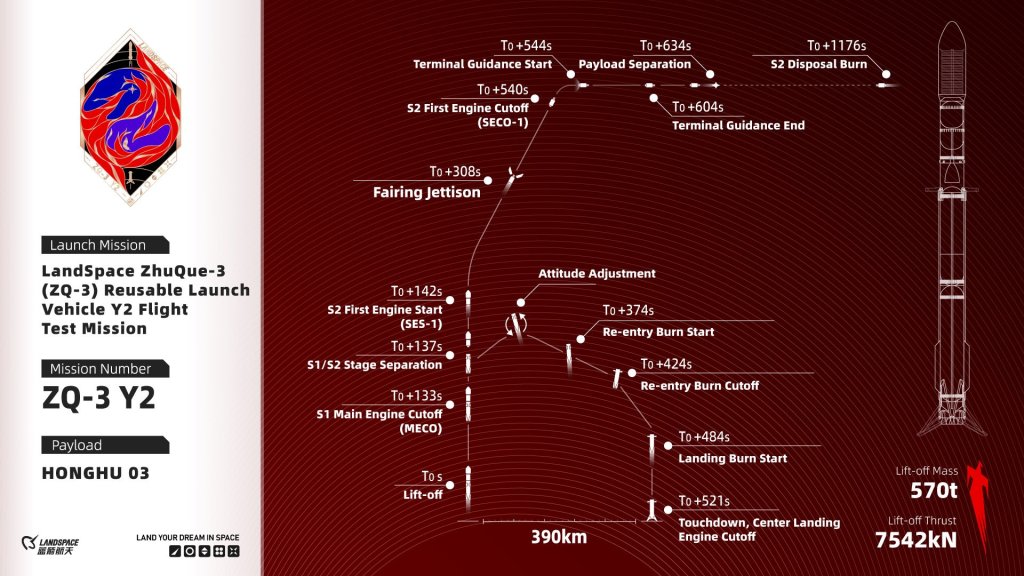
LandSpace, a Chinese aerospace firm, executed the country’s first successful recovery of a reusable space launch booster on land on August 19, 2026. The ZhuQue-3 (ZQ-3) Y2 rocket lifted off from the Dongfeng Commercial Space Innovation Pilot Zone, deployed its payload, and then landed vertically at a designated site in Minqin County, Gansu Province, just six minutes after launch. This follows China’s first-ever reusable booster recovery last month, when state-owned CASC recovered a Long March 10B booster at sea using a ship-based net.
The milestone advances China’s push toward cost-effective, high-tempo orbital launches, with implications for both military and commercial sectors. Reusable boosters like the ZQ-3 can slash launch expenses and accelerate deployment of large satellite constellations, narrowing the gap with U.S. providers such as SpaceX. The ZQ-3’s design mirrors SpaceX’s Falcon 9, including fold-out landing legs and stabilizing fins, though it uses liquid methane as its primary propellant—a choice that reduces soot buildup and simplifies reuse.

Analysts warn this rapid progress could erode the U.S. military’s advantage in space access. China’s satellite fleet has expanded from fewer than 100 in 2013 to over 1,900 today, with hundreds dedicated to tracking U.S. forces. The Pentagon has already signaled plans to counter these developments with new anti-satellite capabilities.
China’s aerospace sector now appears to be accelerating its reusable launch ambitions, which could reshape both global launch markets and military space postures.