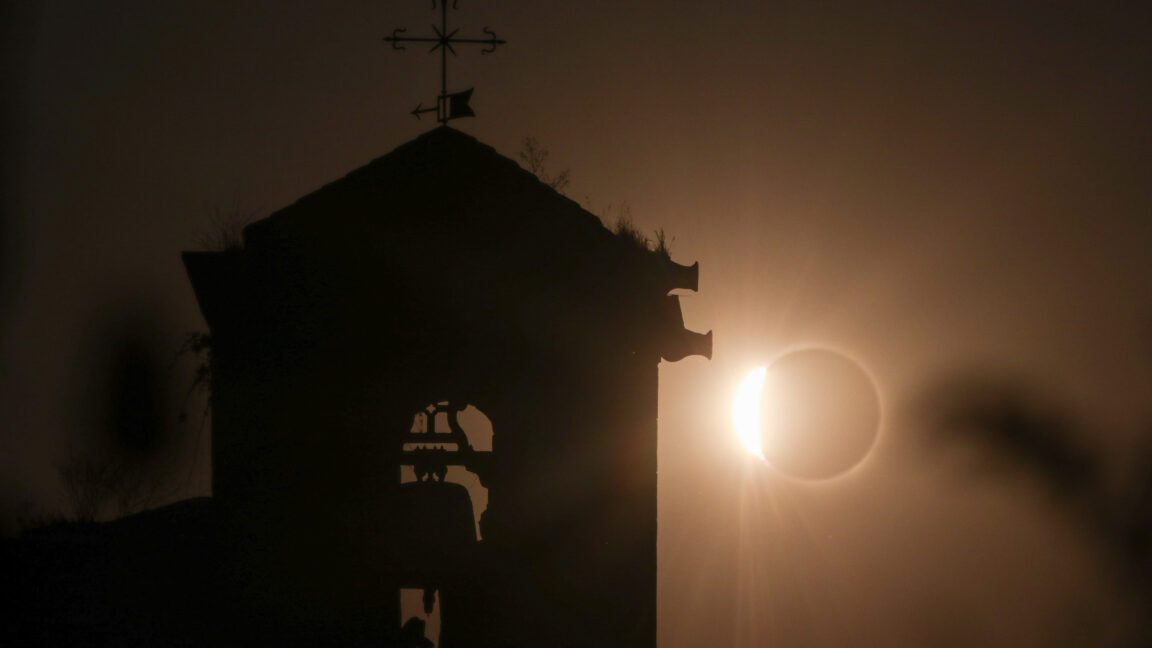
I traveled to Duratón, about 90 minutes north of Madrid, to watch a total solar eclipse and found the experience unforgettable. Standing in the Moon’s shadow felt like a direct glimpse of the precise alignment of the Sun, Moon, and Earth—a rarity made possible only by their exact sizes and distances.
The eclipse followed two recent totalities that crossed the United States in 2017 and 2024, both of which I witnessed. The next one visible from the continental U.S. won’t occur until 2044, which spurred my decision to head to Spain’s open plains, ancient churches, and sunflower‑filled fields for this event. A severe drought had left the landscape dry, turning fields and forests into tinder but also providing clear, unobstructed skies ideal for viewing.
The stark contrast between the blazing August sun and the sudden darkness underscored how fleeting such celestial moments are. While I’ll have to wait decades for the next U.S. total eclipse, the Spanish experience reinforced the value of seeking out future eclipses wherever the path of totality may fall.