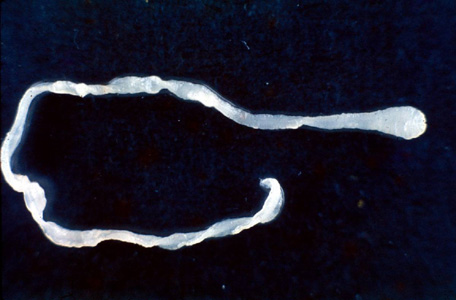
During an elective operation to fix a right‑side inguinal hernia, surgeons unexpectedly uncovered a living worm about 10 inches (26 cm) long inside the patient’s abdominal cavity. The 71‑year‑old man, who had chosen surgery despite the hernia being painless, reported that a similar worm had been discovered in a prior procedure, a detail noted in a recent New England Journal of Medicine case report.
Inguinal hernias are common among older men, occurring when fat or a segment of intestine pushes through a weakness in the abdominal wall. While many hernias cause discomfort or risk strangulation, some remain asymptomatic and are managed with watchful waiting until surgery becomes necessary. When surgery is performed, the protruding tissue is typically pushed back and the defect patched to prevent recurrence.
The presence of a sizable, live parasite in the groin is exceptionally rare and highlights the importance of thorough intra‑operative inspection, even in seemingly straightforward cases. The report adds a peculiar anecdote to medical literature and may prompt clinicians to consider unexpected findings when evaluating abdominal surgeries.